Inflation is a rise in prices, which can be translated as the decline of purchasing power over time.
– Investopedia
For example, a piece of bread used to cost $3.00, and now it costs $3.50. Simply put, you are less wealthy because you can afford less. “A millionaire ain’t what a millionaire used to be.”
Inflation erodes the value of cash. Therefore, investments must be made in assets that return over the rate of inflation in order for you to keep your purchasing power the same. Cash savings inevitably become less valuable over time and, like the chart below suggests, you are losing wealth:

As you can see, US Stocks, Bonds, Bills, and Gold have all outperformed the US dollar. Not only that, but they have also increased your purchasing power by outperforming inflation and therefore increasing your relative wealth.
Inflation also affects the way the economy works. An increase in inflation, especially unexpected inflation, reduces corporate profits and decreases disposable income.
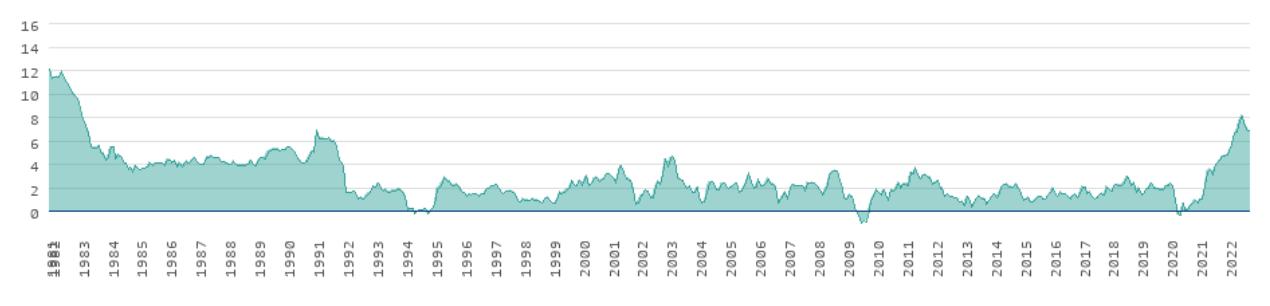
Below me is a 40-year inflation chart. As you can see, inflation is usually in a comfortable range but can breakout, as seen in the early 80’s and in the time post-Covid.
However, forecasting inflation and anticipating how the market will react to such is an impossible feat to hold with enough conviction to make it a valuable pursuit. That’s ok, because what we desire to hold is a high quality basket of stocks that can weather all macro conditions, including inflation.